
There is a moment in every kitchen renovation where you stand, look at your stove, and think
“Do I really need a chimney or will the old exhaust fan survive one more year”
And then tadka happens.
That single moment answers everything.
A kitchen chimney is not just an appliance anymore. It is the difference between a clean modern kitchen and walls that slowly turn into a spice museum.
But here is the catch. Prices are all over the place. One model costs ₹6,000, another ₹45,000, and then suddenly you see one at ₹1.5 lakh and start questioning life choices.
So let us break it down properly.
Kitchen Chimney Designs and Styles
Wall Mounted Chimney

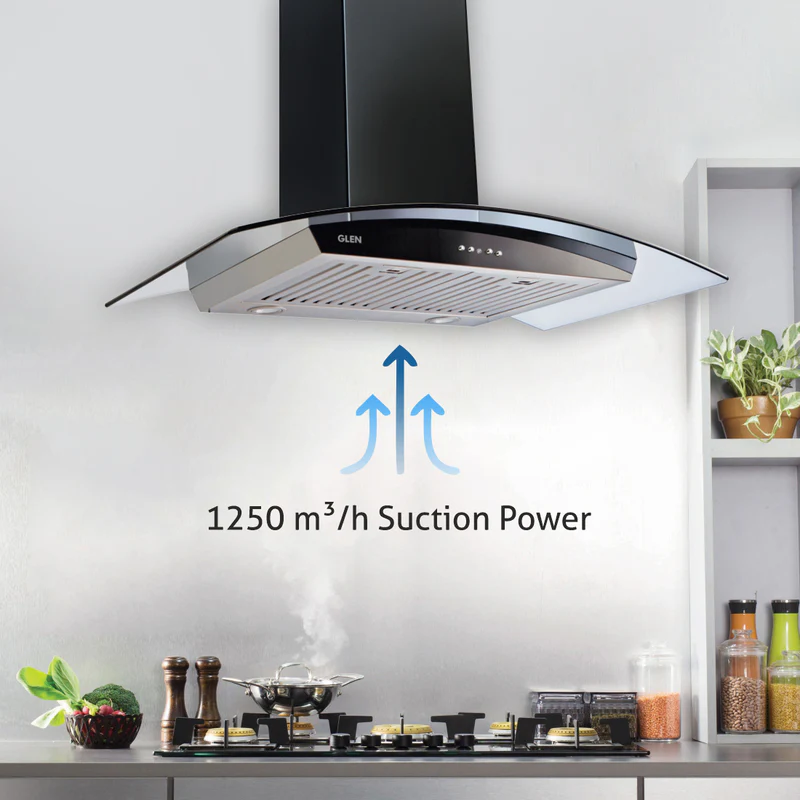
This is the default choice in most homes, and honestly, for good reason. Your stove sits against a wall, the chimney goes right above it, simple and practical.
From a design perspective, this type blends easily with modular kitchens. You can go with curved glass for a modern vibe or a straight-line design if you like things clean and minimal.
Functionally, it handles Indian cooking well, especially if you pick a decent suction model. No drama, no complications. Just works.
Island Chimney


This one is less about need and more about lifestyle.
If your cooking area is placed in the middle of the kitchen, like in open or luxury layouts, you cannot use a wall chimney. So the chimney hangs from the ceiling above the island.
It looks stunning, no doubt. But it comes with a reality check. Higher cost, complex installation, and you need proper ceiling support plus duct planning.
This is the kind of chimney you choose when your kitchen is meant to be seen, not just used.
Pyramid Chimney


Think of this as the old reliable option.
You have probably seen it in older kitchens or budget setups. The shape is simple, no fancy glass, mostly stainless steel.
It is affordable and durable, but visually, it does not add much to the space. If your priority is function over form, it still holds value.
But in a modern modular kitchen, it can feel slightly out of place.
Built In Chimney
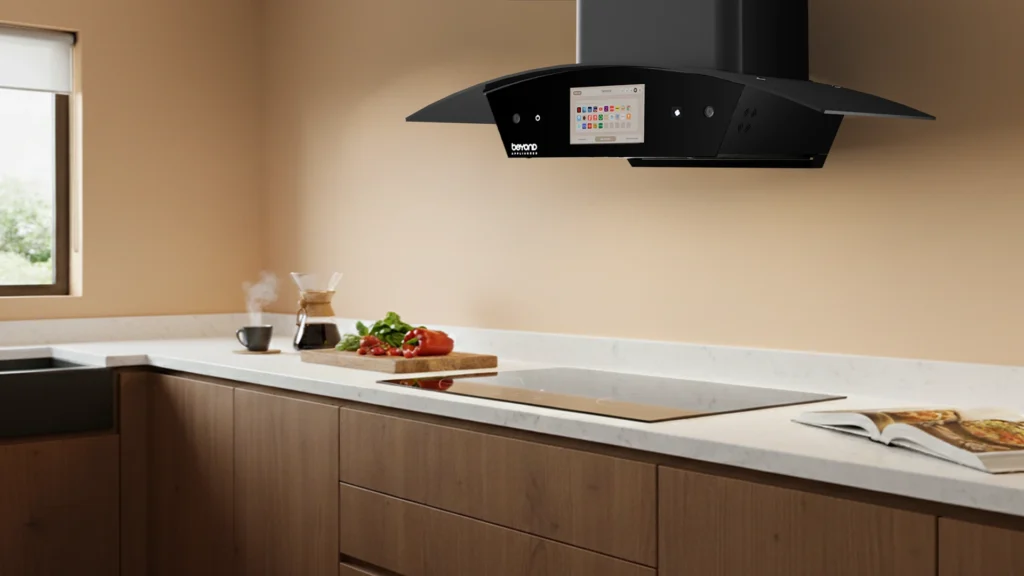

This is where design starts getting serious.
A built in chimney is tucked inside your kitchen cabinet. You do not really “see” it. What you see instead is a seamless, clutter-free kitchen.
It is perfect for minimalist or premium interiors where every line matters.
But here is the catch. Planning is crucial. You cannot just add it later. Cabinet design, ventilation, and measurements all need to be aligned from day one.
This is less of an appliance and more of a design decision.
Quick Reality Check
If your kitchen is a typical Indian setup, wall mounted is your safest bet.
If you want visual impact and have space, island chimney makes a statement.
If budget is tight, pyramid works without complaints.
If you care about aesthetics deeply, built in is where things feel premium.Each one solves the same problem, smoke and grease.
But how they fit into your kitchen story, that is where the real difference lies.
Kitchen Chimney Price Range in India
Let us talk numbers without confusion.
| Category | Price Range | What You Get |
|---|---|---|
| Budget | ₹6,000 – ₹12,000 | Basic suction, manual cleaning |
| Mid Range | ₹12,000 – ₹25,000 | Auto clean, better suction |
| Premium | ₹25,000 – ₹50,000 | Silent motors, sensors, smart features |
| Luxury | ₹50,000 – ₹1.5 lakh+ | Designer chimneys, island models |
Real market listings show entry models starting around ₹6,000 while advanced auto clean chimneys commonly sit between ₹15,000 and ₹30,000.
Some premium designer chimneys can go as high as ₹1.75 lakh depending on brand and technology.
Real Market Price Examples
To make it more real, here are actual current price points you will find:
| Model Type | Example Price |
|---|---|
| Basic chimney | ₹6,000 – ₹10,000 |
| Auto clean chimney | ₹14,000 – ₹25,000 |
| BLDC motor chimney | ₹18,000 – ₹35,000 |
| Premium smart chimney | ₹30,000 – ₹45,000 |
For example
- Elica models around ₹13,990
- Faber auto clean models around ₹15,990 to ₹18,990
- Premium Bosch island chimney around ₹55,000
What Actually Affects Chimney Price
This is where people either overspend or regret later.
Suction Power
Measured in m³/hr.
Indian cooking means oil, spices, smoke. You need at least 1200 m³/hr.
Higher suction = higher price.
Filter Type
- Baffle filter is cheaper but needs cleaning
- Filterless is expensive but low maintenance
Auto Clean Technology
This one changes everything. Oil collects in a tray instead of clogging filters.
Adds ₹3,000 to ₹8,000 easily.
Motor Technology
BLDC motors are the new trend
Less noise, less electricity, higher price
Size
60 cm for 2–3 burner
90 cm for 4 burner
Bigger chimney = higher cost
Types of Kitchen Chimneys by Technology
Baffle Filter Chimney


This is the old-school workhorse. Inside, it uses multiple metal layers that force smoke and oil particles to change direction. When that happens, the heavier grease gets trapped while cleaner air passes through.
In real life, this means it handles heavy Indian cooking quite well. Deep frying, tadka, butter chicken chaos, it survives all of it.
But there is a catch. The oil builds up inside those metal layers, and someone has to clean it. That someone is usually you. If you ignore it, suction drops and performance suffers.
Think of it as reliable but slightly demanding.
Filterless Chimney

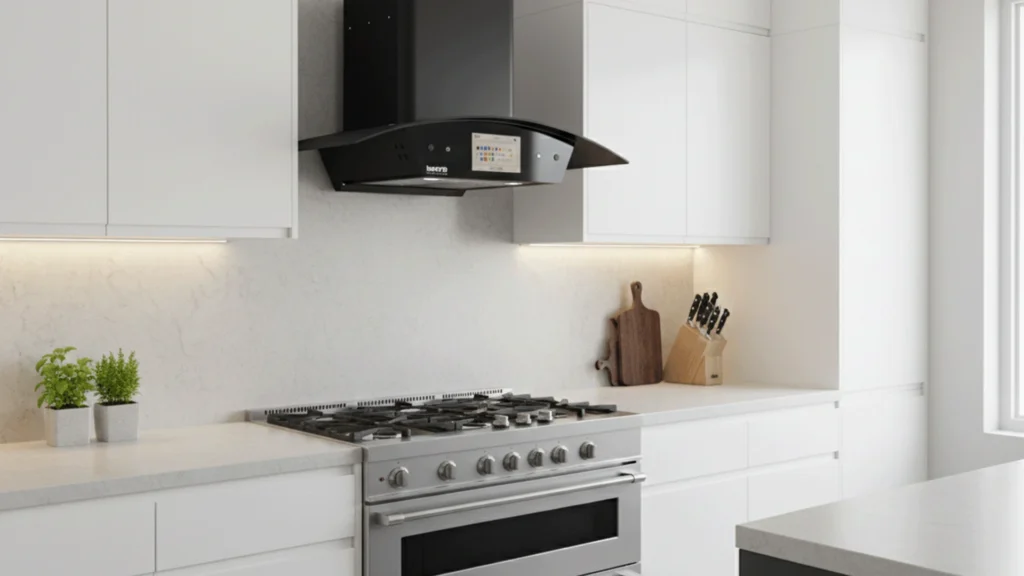
This is where things start feeling modern.
There are no traditional filters inside. Instead, the chimney is designed in a way that separates oil and smoke using airflow dynamics. Sounds fancy, but the benefit is simple, less manual cleaning.
You do not have to open and scrub filters every few weeks. Maintenance is lower, and performance stays more consistent over time.
The trade-off is price. You pay more upfront, but you save effort later. For busy households, this feels worth it.
Auto Clean Chimney


This is the closest thing to “set it and forget it” in chimneys.
It uses heat or a heating element to melt the grease inside. That melted oil then flows into a small container or tray which you can remove and clean occasionally.
For Indian kitchens, this makes a big difference. Because let’s be honest, oil and masala are not going anywhere.
You still need to clean the oil collector, but compared to scrubbing filters, it feels like a small job.
That is why most people upgrading today end up choosing this type. It hits the sweet spot between convenience and performance.
Pros and Cons of Kitchen Chimneys
| Pros of Kitchen Chimneys | Cons of Kitchen Chimneys |
|---|---|
| Keeps your kitchen cleaner and reduces grease buildup | Installation cost is additional |
| Minimizes oil deposits on cabinets and tiles | Requires proper ducting space |
| Effectively controls smoke and cooking odors | Budget models can be noisy |
| Enhances kitchen with a modern, premium look | Regular maintenance is still needed |
Installation Cost You Should Not Ignore
This is where budgets quietly break.
| Item | Cost |
|---|---|
| Installation | ₹500 – ₹1,500 |
| Duct pipe | ₹800 – ₹2,000 |
| Core cutting | ₹1,500 – ₹3,000 |
So your ₹15,000 chimney can easily become ₹20,000.
Best Kitchen Chimney Brands in India
You will see these everywhere
These brands dominate because they balance performance and service network.
Ducted vs Ductless Chimney


What is a Ducted Chimney
A ducted chimney throws smoke, oil particles, and heat outside your home through a pipe.
It is directly connected to an outlet in the wall or ceiling. Whatever you cook, the mess goes out.
In simple terms
Cook inside, smoke goes outside, problem solved.
This is why most serious kitchens prefer this setup.
Core Difference That Actually Matters
| Feature | Ducted Chimney | Ductless Chimney |
|---|---|---|
| Airflow | Throws air outside | Recirculates air |
| Performance | Strong and effective | Moderate |
| Installation | Needs duct pipe | Easy installation |
| Maintenance | Lower | Higher (filters need replacement) |
| Best For | Indian cooking | Light cooking |
Performance in Indian Kitchens (Honest Truth)
If your cooking involves
tadka, frying, spices, oil, smoke
Then ducted chimney wins. No competition.
Ductless chimneys struggle with heavy oil particles because they rely on filters. Those filters clog over time, and performance drops.
Installation Reality Check
Ducted Chimney
- Needs wall drilling or outlet
- Requires duct pipe planning
- Slightly higher setup cost
But once done, it works beautifully for years.
Ductless Chimney
- No ducting required
- Faster installation
- Good for apartments where drilling is not possible
But long-term maintenance becomes your headache.
Kitchen Chimney Maintenance Cost
This is the part most people ignore while buying, and then quietly regret later.
A chimney is not a “install and forget” appliance. It deals with oil, smoke, and grease every single day. So naturally, it needs upkeep.
Here is what you realistically spend:
| Maintenance Type | Cost Range | What It Includes |
|---|---|---|
| Cleaning service | ₹500 – ₹1500 per visit | Deep cleaning of filters and inner parts |
| Annual maintenance | ₹1500 – ₹3000 | 1–2 services + basic checkups |
| Carbon filter replacement | ₹500 – ₹2000 | Needed in ductless chimneys |
Now the real insight
If you choose auto clean or filterless models, your maintenance effort drops, but not to zero. You still clean the oil tray and occasionally service it.
If you go with a basic baffle filter chimney, cleaning becomes more frequent and hands-on.
So while a cheaper chimney saves money upfront, it may cost more in effort and maintenance over time.
Common Mistakes to Avoid When Buying a Chimney
This is where most buying decisions go wrong, not because of budget, but because of small oversights.
The first big mistake is choosing low suction just to save money. On paper it looks fine, but in a real Indian kitchen, it struggles. Smoke escapes, grease settles, and you end up disappointed.
Another common issue is ignoring duct length and bends. A long or twisted duct pipe reduces suction power significantly. Even a good chimney can perform badly if installation is poor.
Size mismatch is surprisingly common. People install a smaller chimney over a larger stove and then wonder why smoke leaks from the sides.
Noise is another silent deal breaker. Many buyers never check decibel levels. Cheaper models can get loud enough to disturb conversations, especially in open kitchens.
And then there is the classic mistake, paying extra for looks. Fancy glass, touch panels, lights. They look great in showrooms, but performance should always come first.
Avoid these, and you already make a smarter purchase than most.
Which Chimney is Best for Your Kitchen Type
| Kitchen Type | Best Chimney Choice | Quick Reason |
|---|---|---|
| Small Kitchen | 60 cm Wall Mounted | Compact, fits tight spaces |
| Modular Kitchen | Auto Clean 1200–1500 m³/hr | Best for daily Indian cooking |
| Open Kitchen | Silent / BLDC Chimney | Low noise, comfortable living space |
| Large Kitchen | 90 cm High Suction | Covers wider cooking area |
| Island Kitchen | Island Chimney | Needed for center cooking layout |
| Luxury Kitchen | Built-in Chimney | Clean, seamless premium look |
| Heavy Cooking | 1500+ m³/hr Auto Clean | Handles oil, smoke, frequent use |
How to Choose the Right Chimney (My Perspective)
Let me be honest here.
Most people choose chimneys based on looks and regret later.
Instead, think like this
If you cook daily with heavy oil
Go for auto clean + 1200–1500 suction
If your kitchen is open
Invest in a silent BLDC model
If budget is tight
Take a simple baffle filter but be ready to clean
If you want a luxury modular kitchen
Go for built in or island chimney

